¥780,000 ($4,947.75)tax included
Kyoto lacquer and maki-e, transformed into art you can carry.
Bringing the tradition of Japanese craftsmanship into contemporary life.
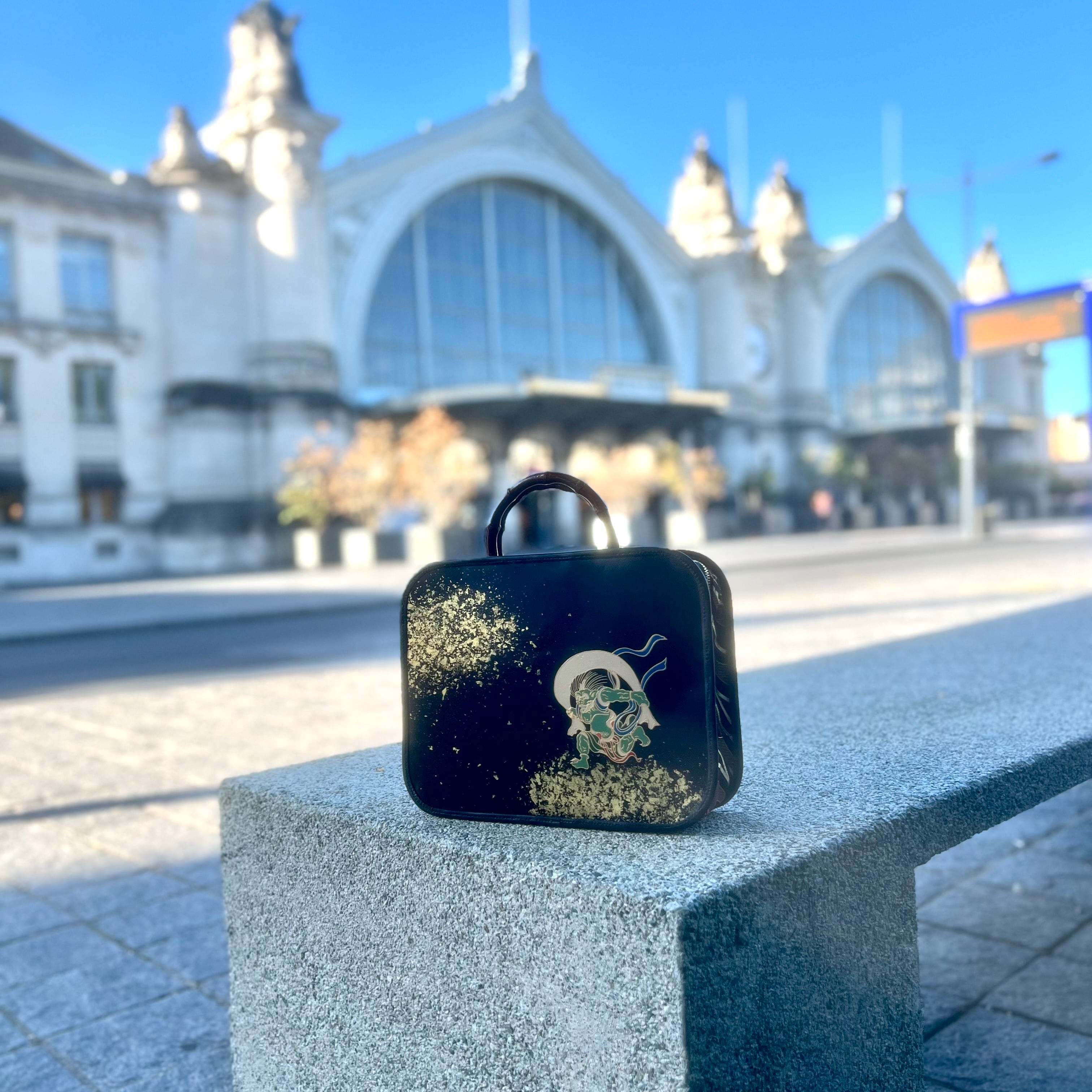
This exceptional art bag by RAKUHOKU JAPAN brings together distinctive Japanese materials and the craftsmanship of Kyoto artisans.
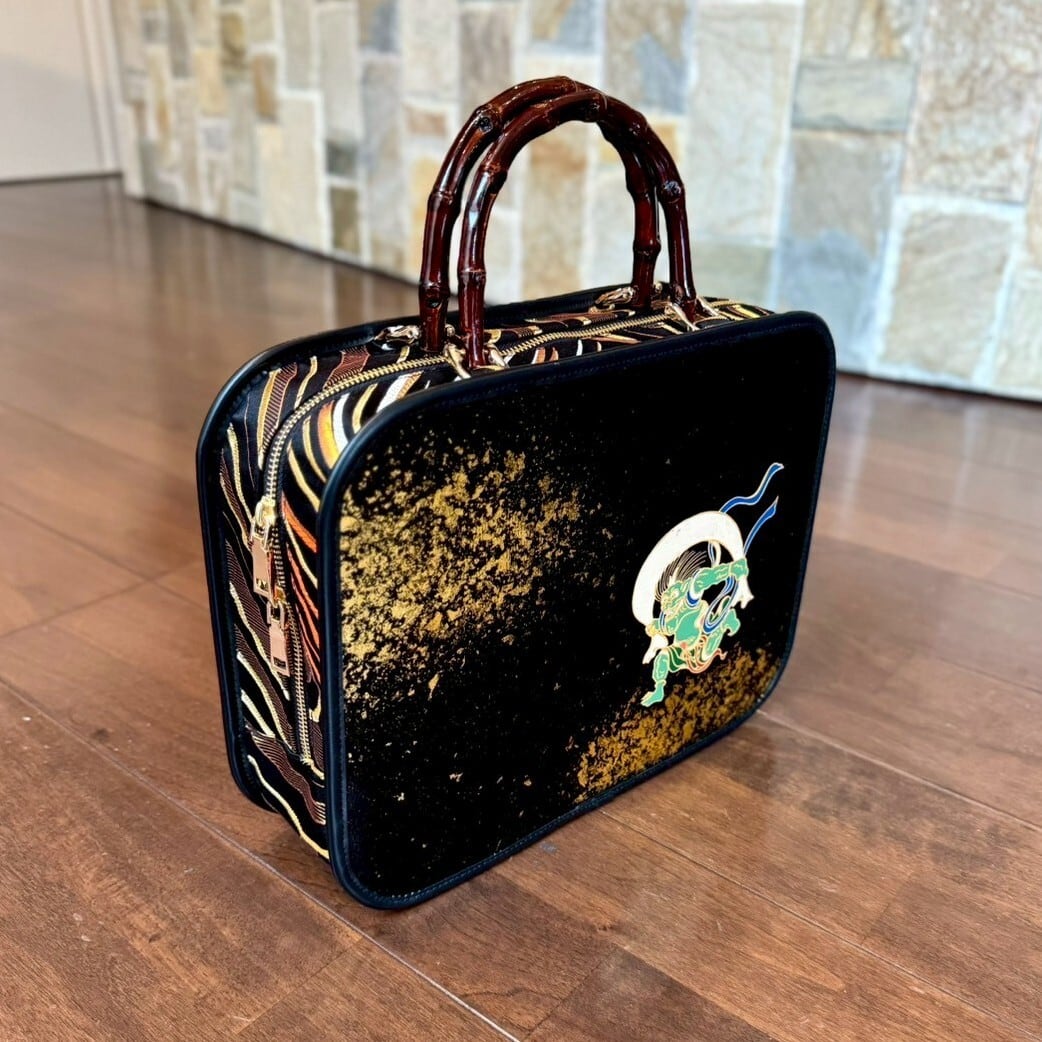
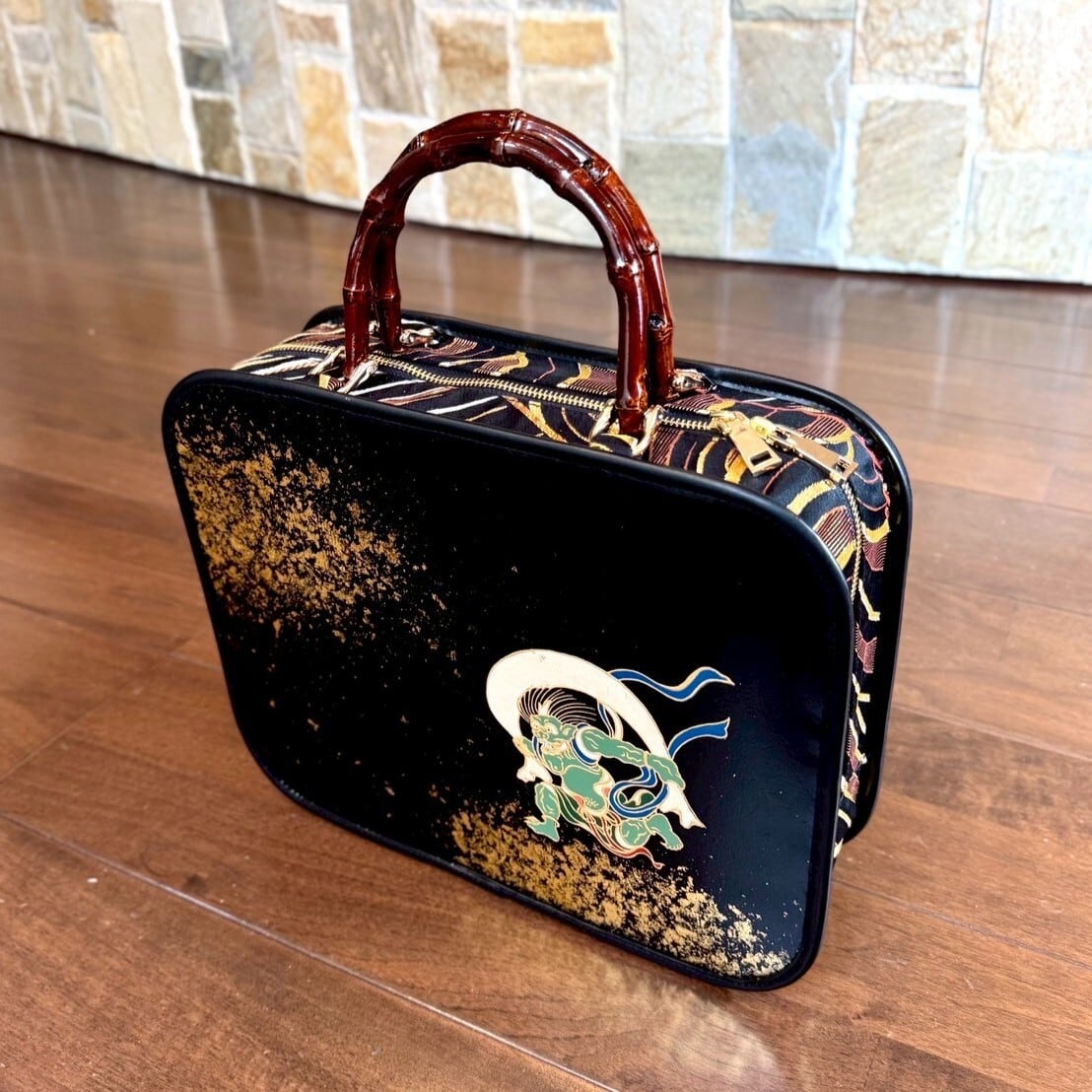
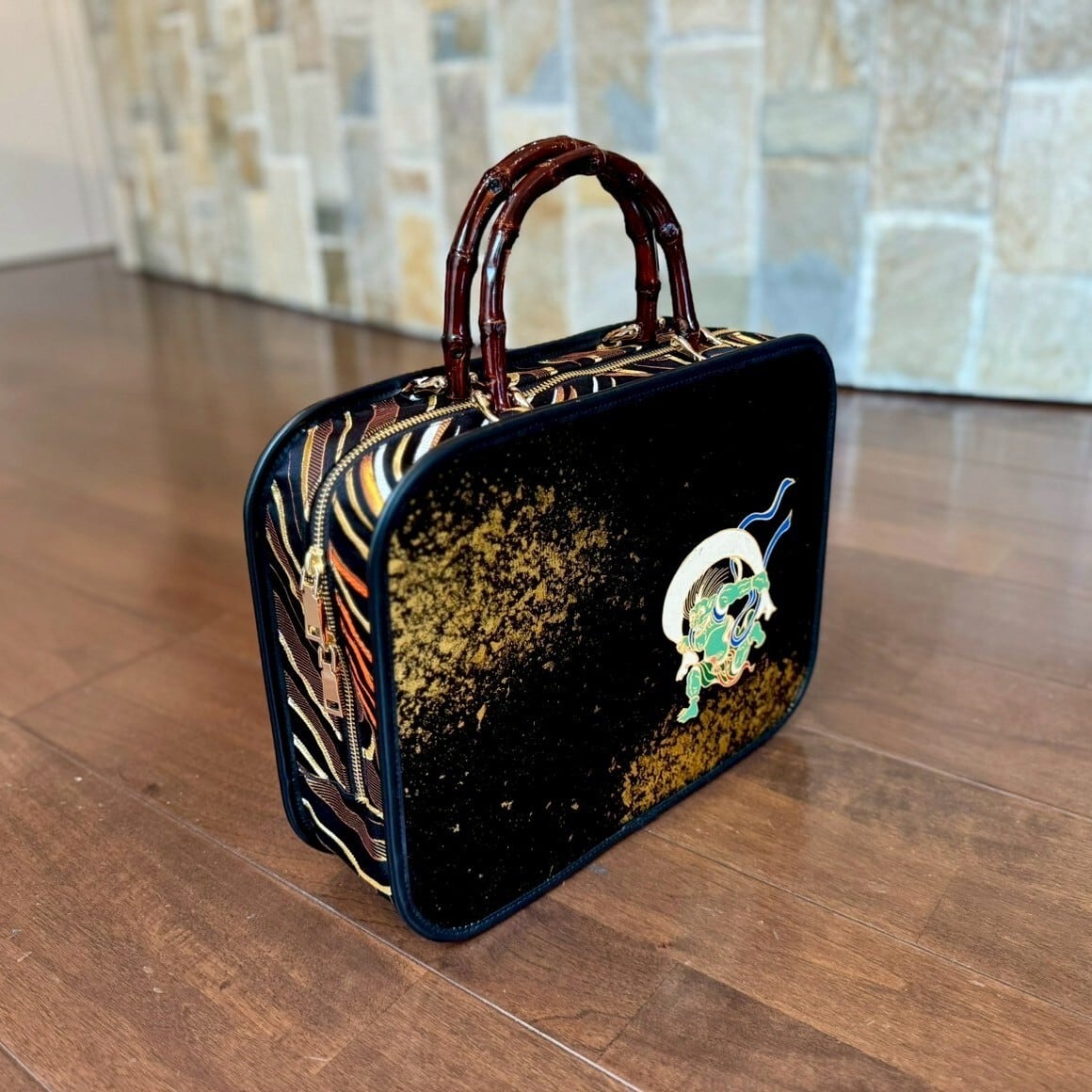
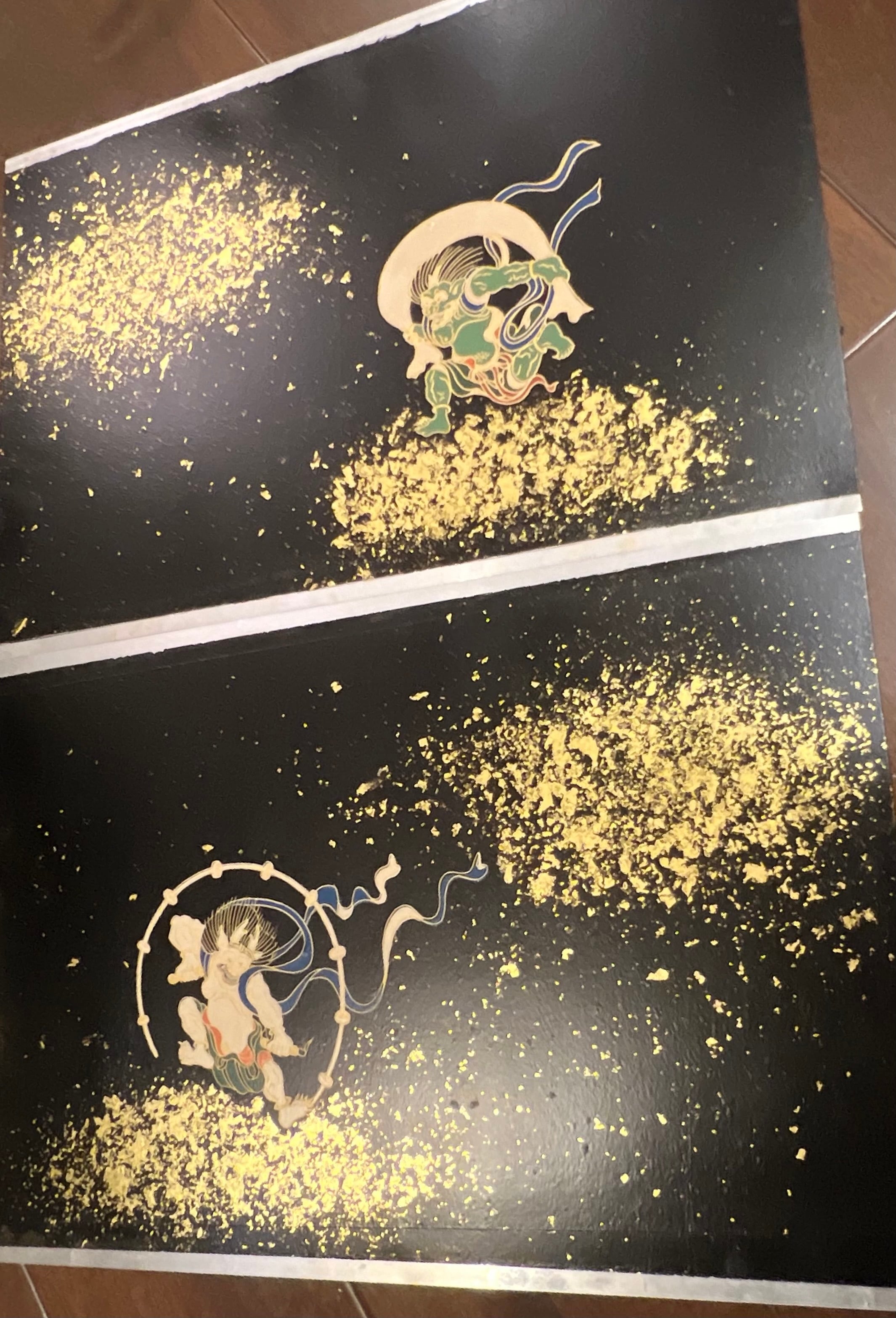
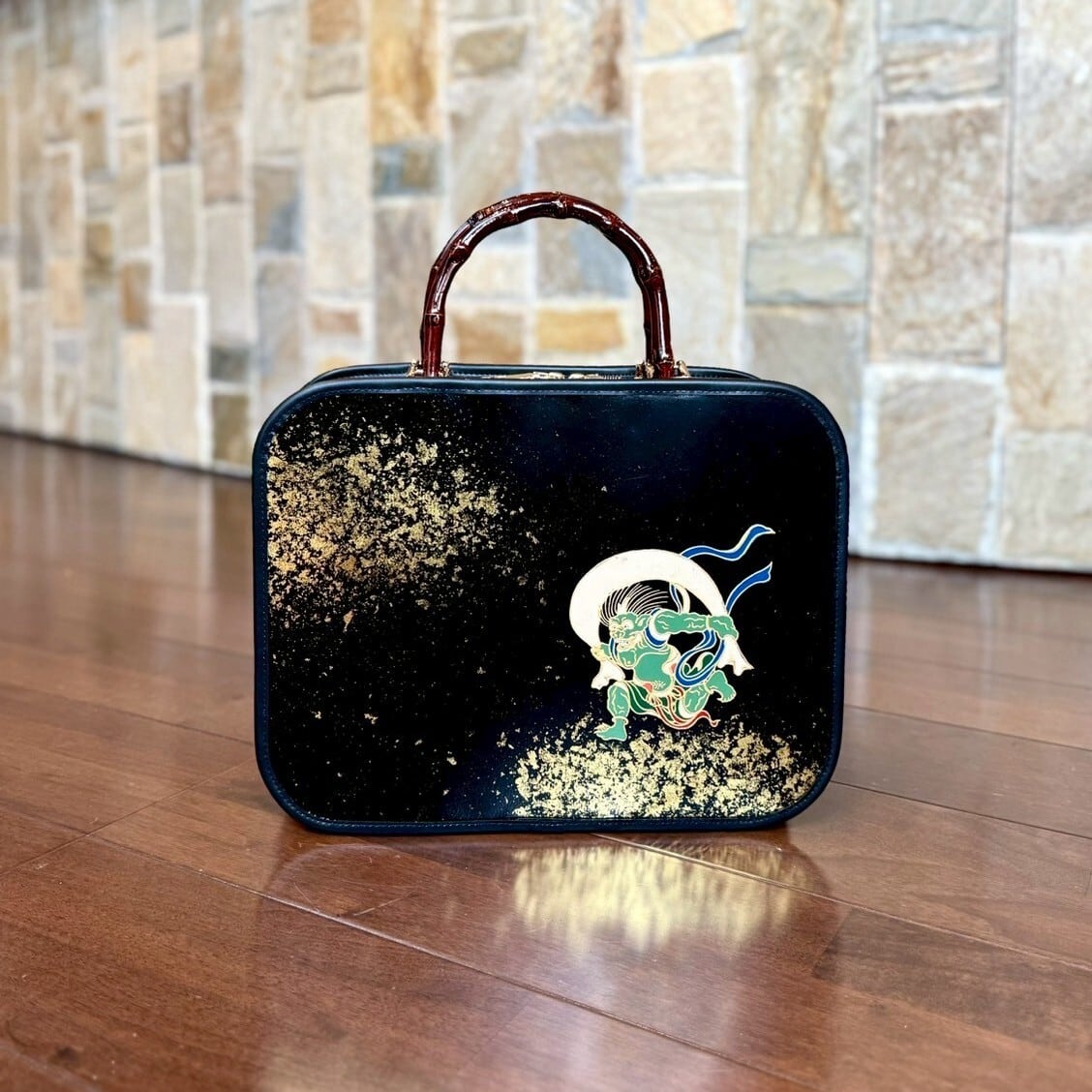
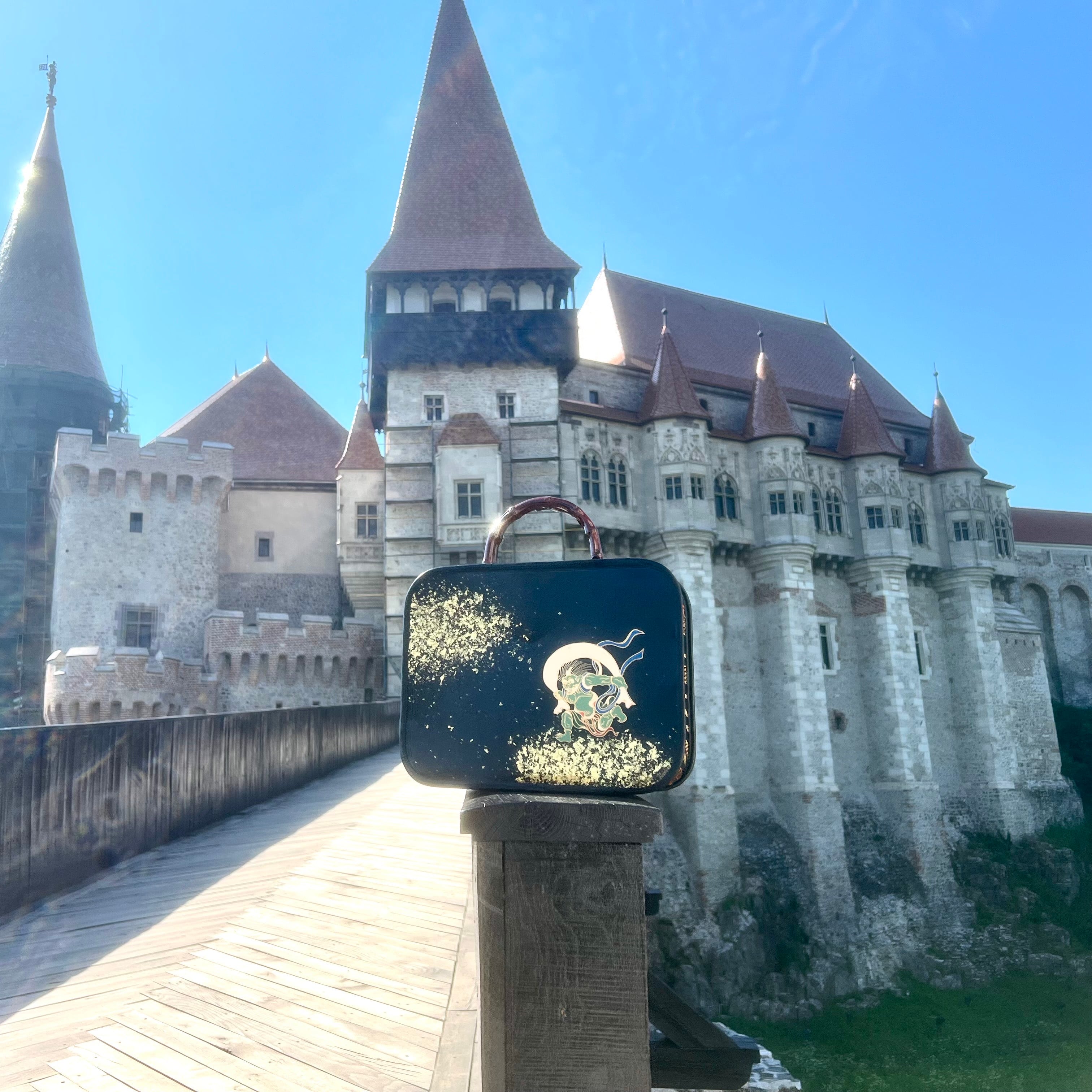
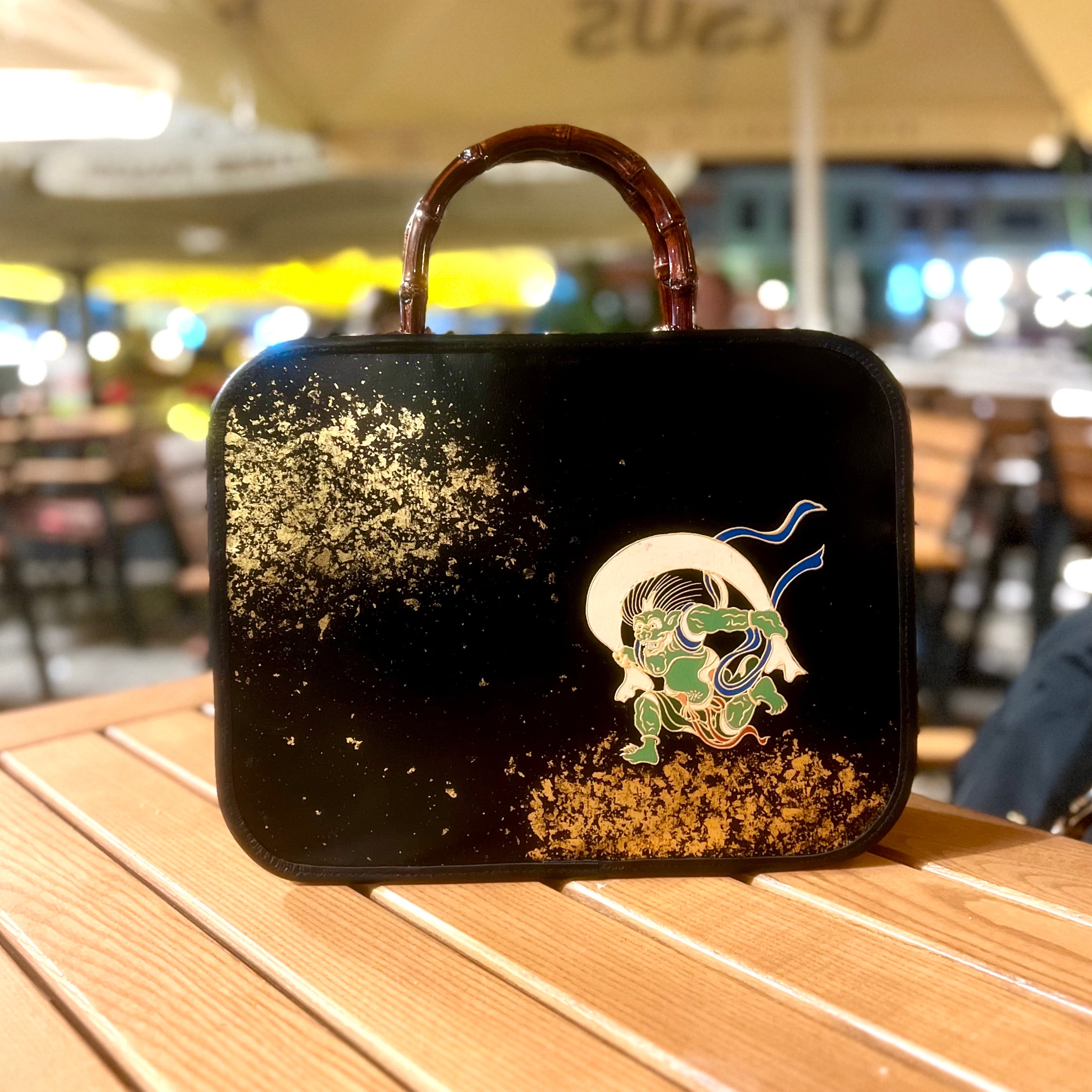
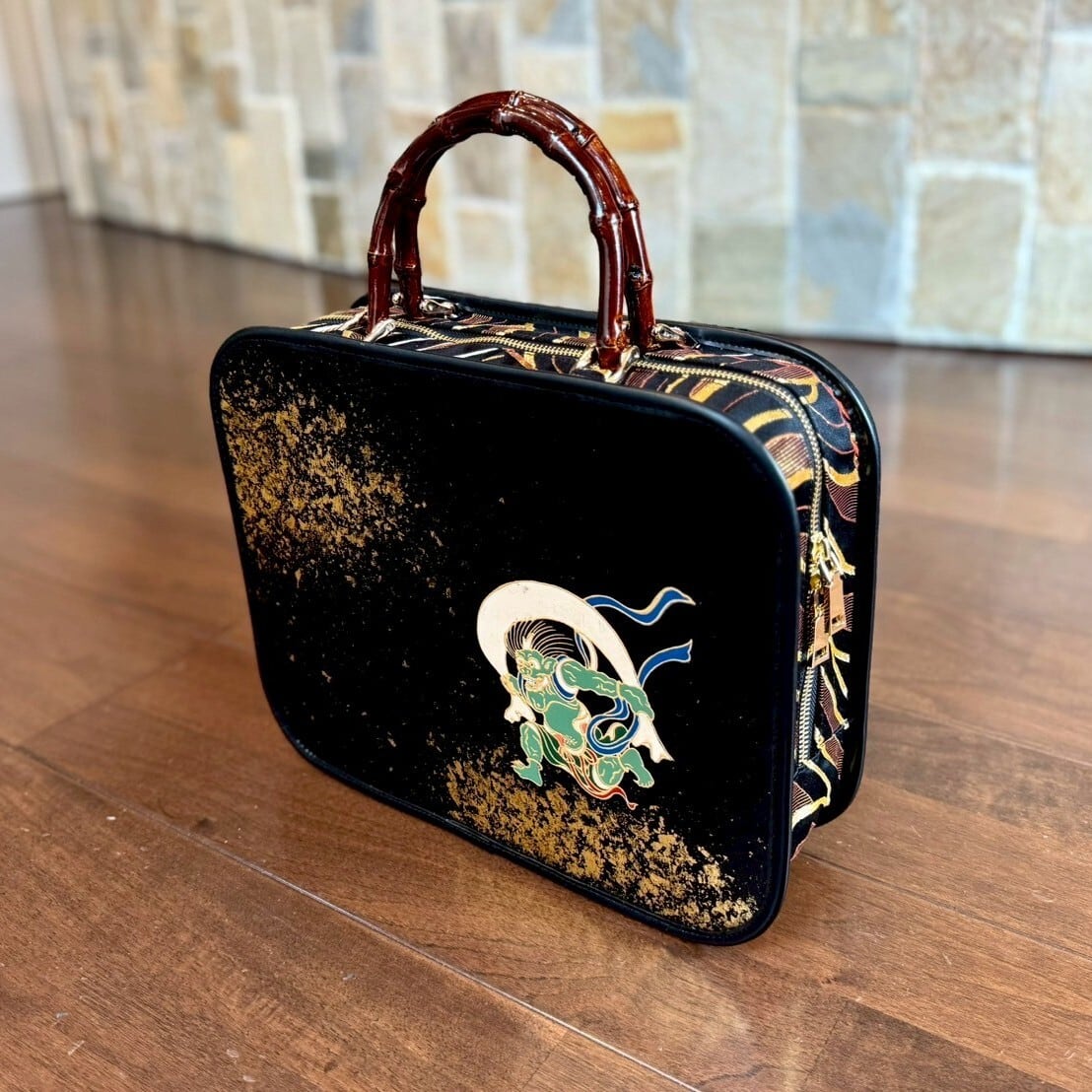
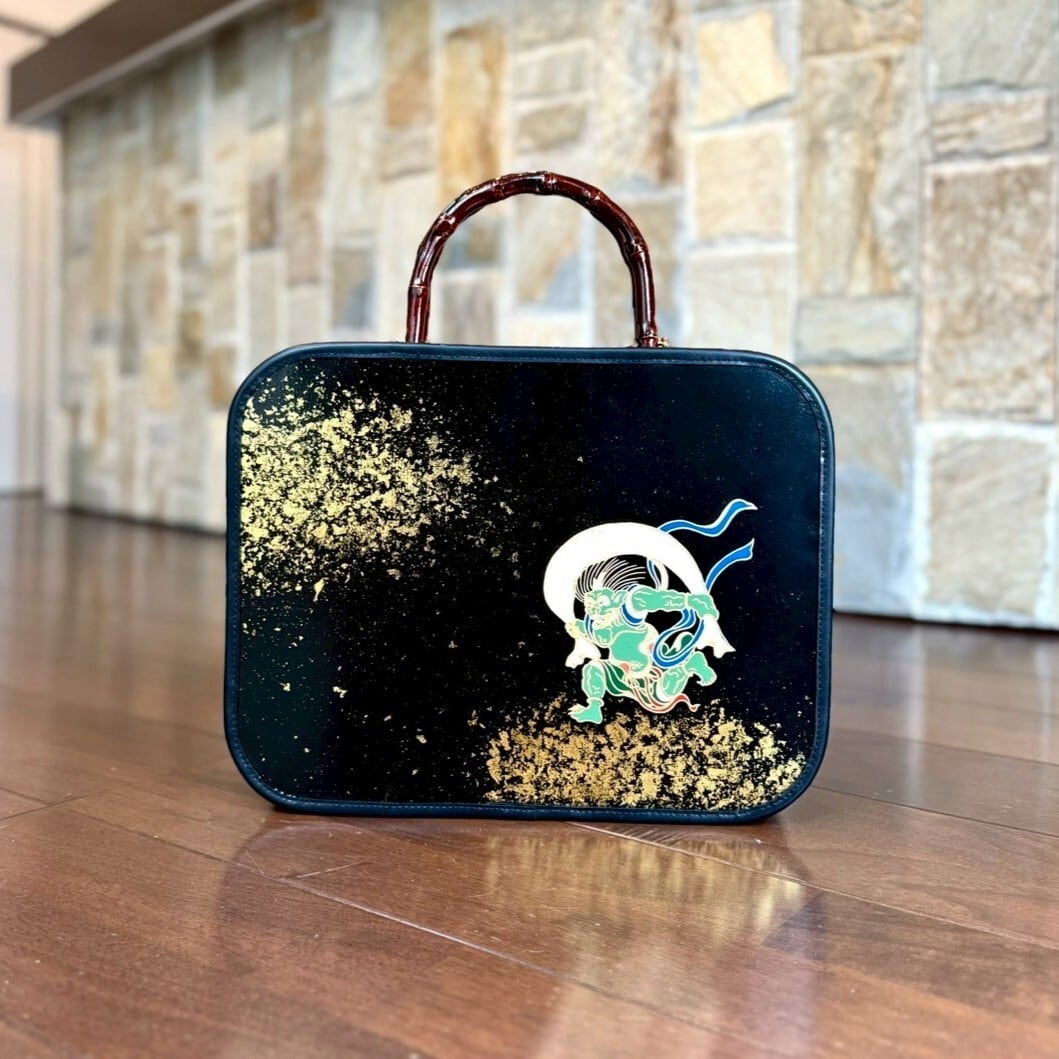
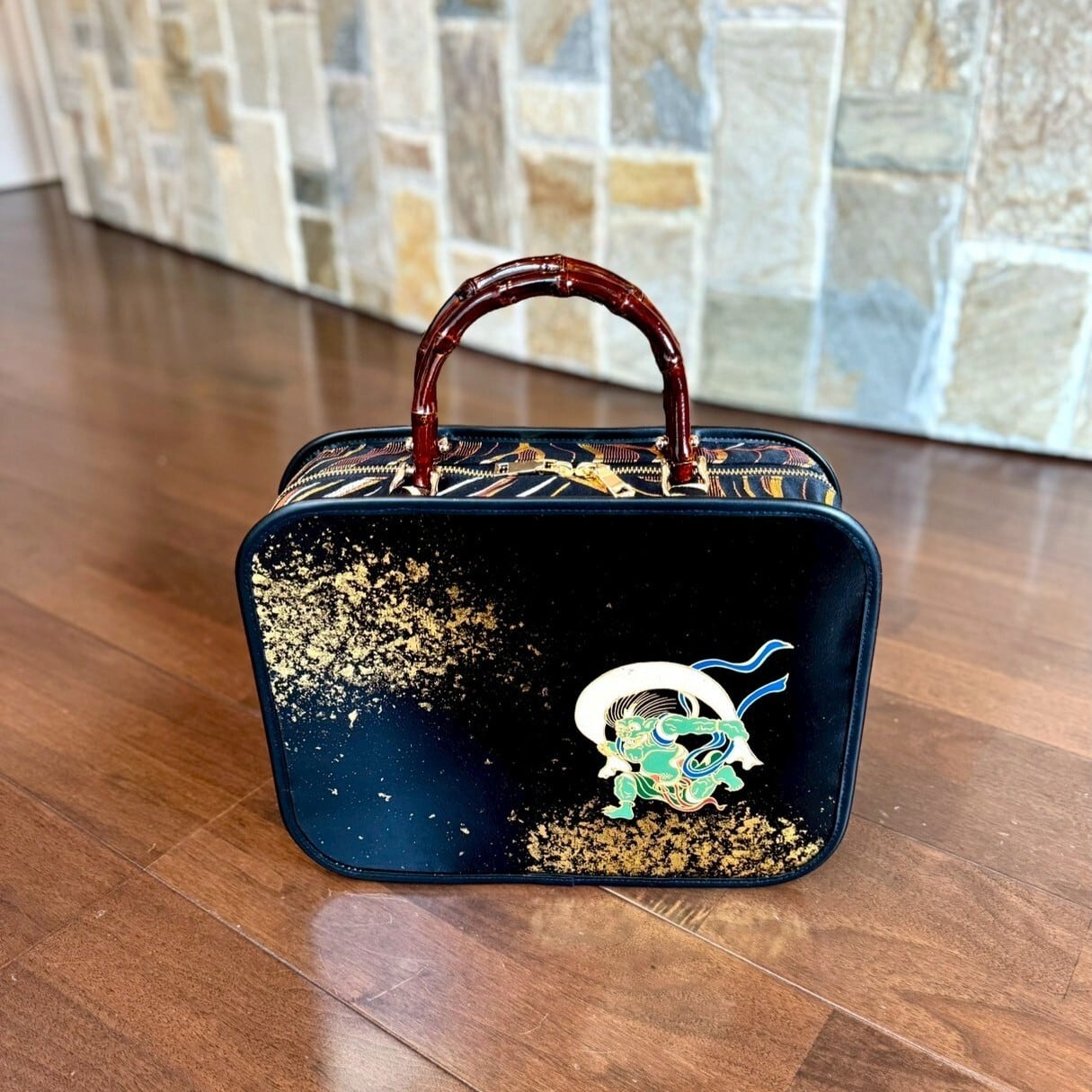
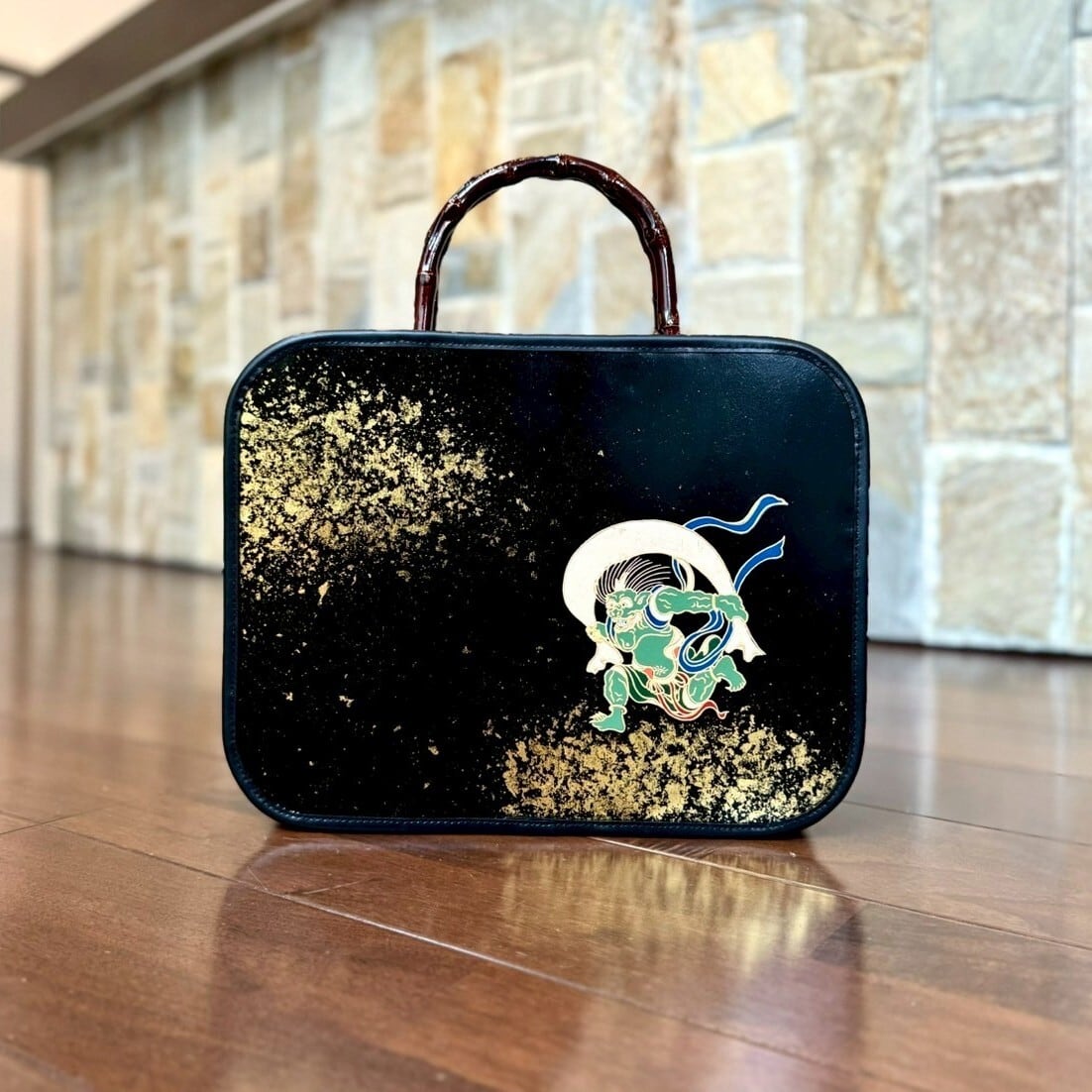
The front panel is crafted from aluminum, finished with Japanese urushi lacquer, and decorated using traditional maki-e techniques by skilled artisans in Kyoto.
Depicted against the deep black lacquer surface are Fūjin and Raijin — the Japanese gods of wind and thunder, one of the most iconic subjects in Japanese art.
This design is not printed.
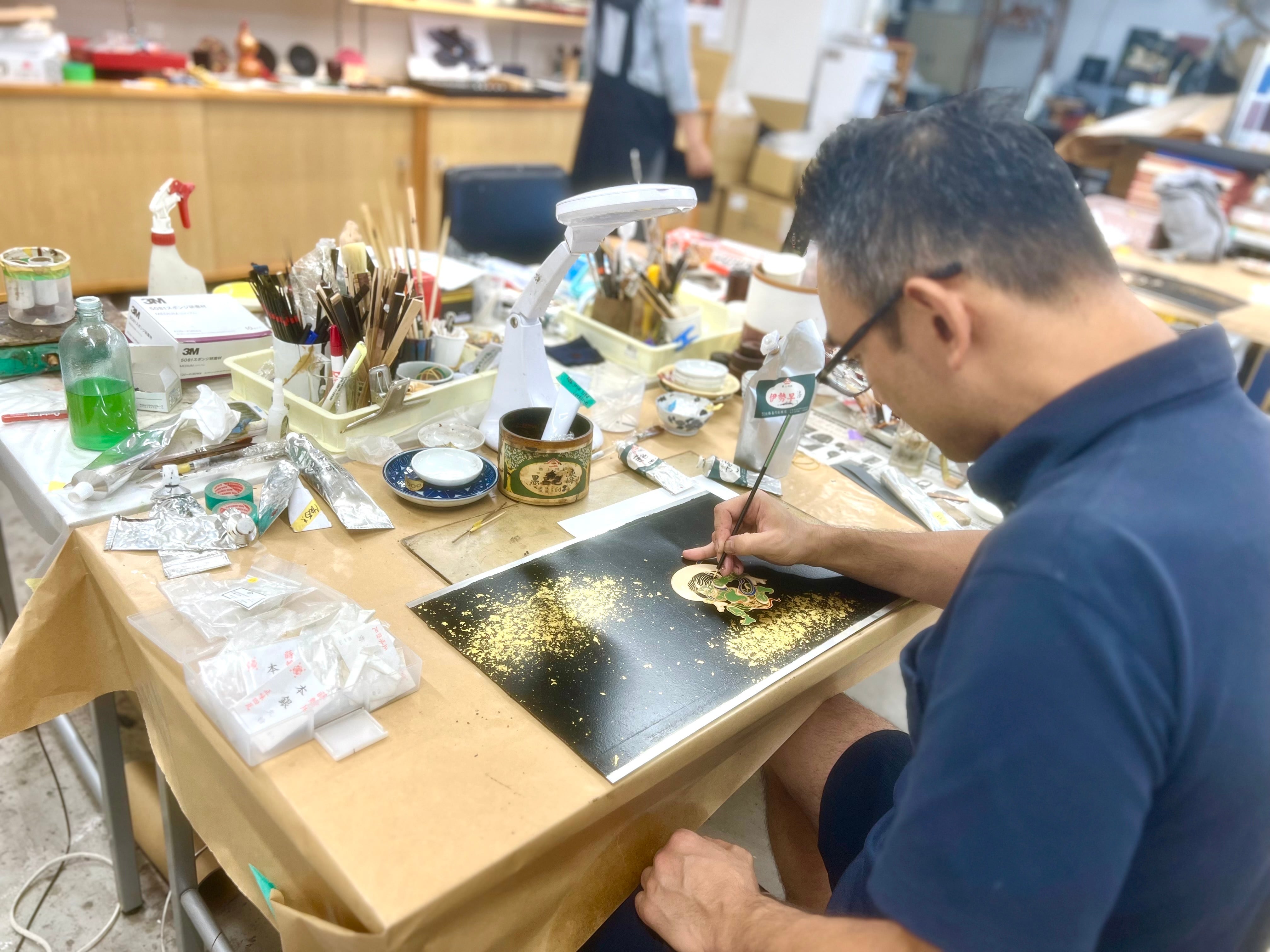
Each piece is individually created by hand, with Kyoto lacquer and maki-e artisans applying their craft directly to the surface.
The gold detailing that emerges against the deep black lacquer is created using genuine gold.
The rich luster of Japanese lacquer changes subtly with the light, while genuine gold creates a delicate brilliance unique to the material.
Because each piece is created by hand, no two are exactly alike.
Each bag carries its own individual expression, shaped by the hands of the artisans who created it.
⸻
Lacquer & Maki-e by Sato Kiyomatsu Shoten, Kyoto — Established in 1921
The lacquer and maki-e work featured in this piece is created by Sato Kiyomatsu Shoten, a Kyoto-based company specializing in Japanese lacquer.
Since its establishment in 1921, the company has been involved in the refining, application, and development of urushi lacquer.
While preserving the traditions of Japanese lacquer craftsmanship, Sato Kiyomatsu Shoten has also continued to explore new possibilities for urushi through research and development, including collaborative work with the Kyoto Municipal Institute of Industrial Technology and Culture.
Its expertise extends far beyond traditional wooden objects, with lacquer techniques applied to a wide variety of materials including metal, synthetic resin, textiles, and leather.
One of its notable projects is “Sennen no Hikari” (A Thousand Years of Light), the lacquered and maki-e elevator doors installed at Kyoto City Hall.
The project incorporates lacquer jointly developed by Sato Kiyomatsu Shoten and the Kyoto Municipal Institute of Industrial Technology and Culture, with Kyoto-grown Tamba urushi used in the finishing process.
The company’s work has also extended to projects involving BMW, lacquer and maki-e decoration on Harley-Davidson motorcycles, a special lacquered edition of tmsuk’s RODEM personal mobility vehicle, and works by contemporary artist Kenji Yanobe.
Rather than simply preserving tradition, Sato Kiyomatsu Shoten continues to explore new materials, new products, and new forms of expression.
RAKUHOKU JAPAN brings this spirit of lacquer and maki-e craftsmanship into the form of a contemporary art bag.
⸻
Handcrafted Maki-e Using Genuine Gold
One of the defining features of this piece is its maki-e decoration, created with Japanese urushi lacquer and genuine gold.
The artisan works directly by hand, building the design through multiple processes to create Fūjin and Raijin and the surrounding gold details.
There is the inherent beauty and value of genuine gold itself.
And beyond the material lies something equally important: generations of lacquer and maki-e knowledge, combined with the hand of the artisan.
The depth of the black lacquer and the delicate brilliance of genuine gold cannot be fully captured in photographs.
Its appearance changes subtly depending on the angle and the way light falls across the surface, revealing different expressions as the bag moves.
The base of the maki-e artwork in this piece is an aluminum panel.
Traditional Japanese lacquer and maki-e techniques meet aluminum, a contemporary material.
By bringing together materials and techniques from different eras, RAKUHOKU JAPAN does not simply reproduce traditional craft.
Instead, we reinterpret it as a new form of contemporary art that can be carried and experienced in everyday life.
⸻
Washi Tatami — A Distinctively Japanese Material
This bag incorporates washi tatami, a material actually used in the interiors of Japanese homes and hotels, reimagined here as a material for contemporary bag design.
Made from specially processed Japanese paper that is coated and woven, washi tatami offers excellent durability and water resistance compared with traditional igusa rush tatami.
It is also designed to resist mold and the proliferation of dust mites, while being less susceptible to the absorption of moisture and stains, helping it maintain its appearance over time.
Tatami has supported Japanese living spaces for generations.
RAKUHOKU JAPAN brings this traditional element of Japanese interiors into a new context — a bag designed for contemporary life.
The delicate woven texture and distinctive character of washi tatami become part of the visual design, while its functional qualities make it particularly suited to an item intended to be carried and used.
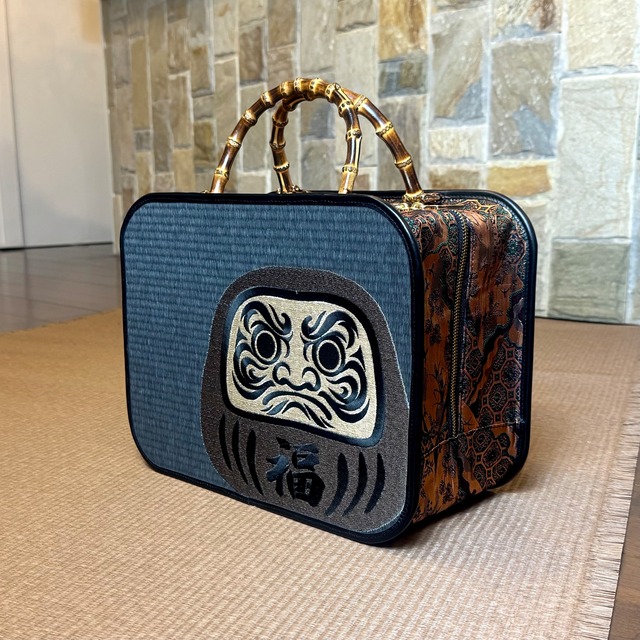
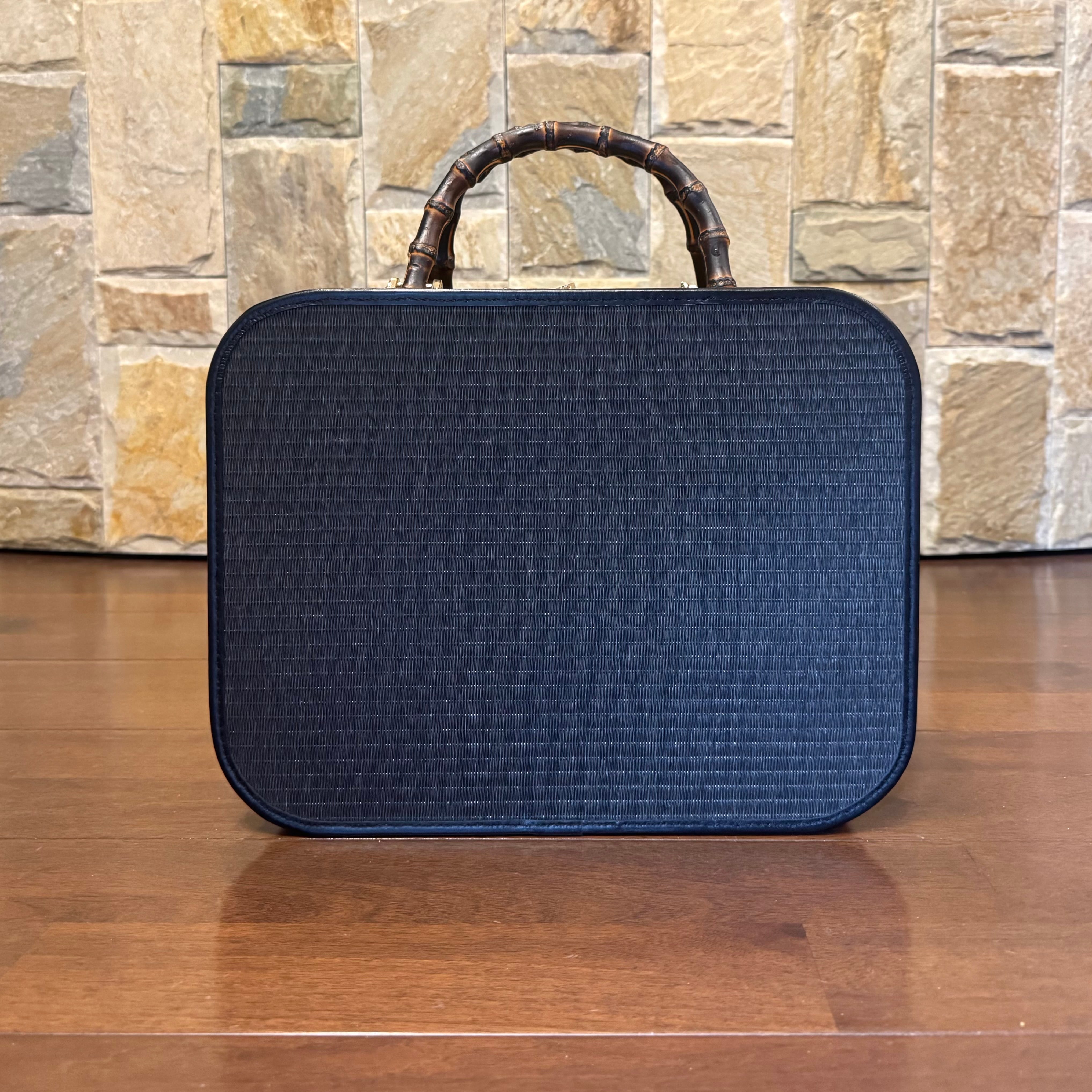
In contrast to the richly decorated lacquer and maki-e artwork on the front, the back is intentionally kept understated, using plain black washi tatami without additional decoration.
The luster of urushi lacquer.
The brilliance of genuine gold.
The quiet woven texture of washi tatami.
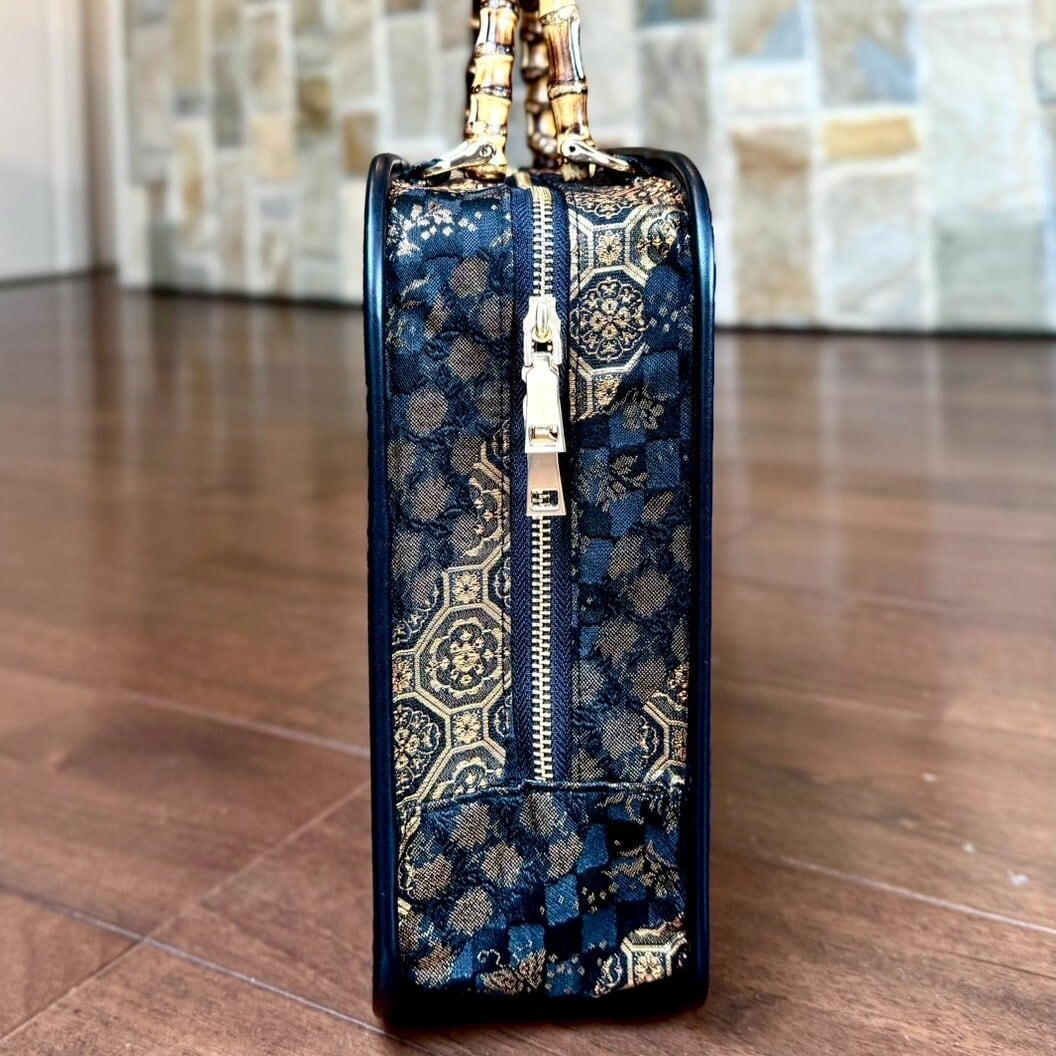
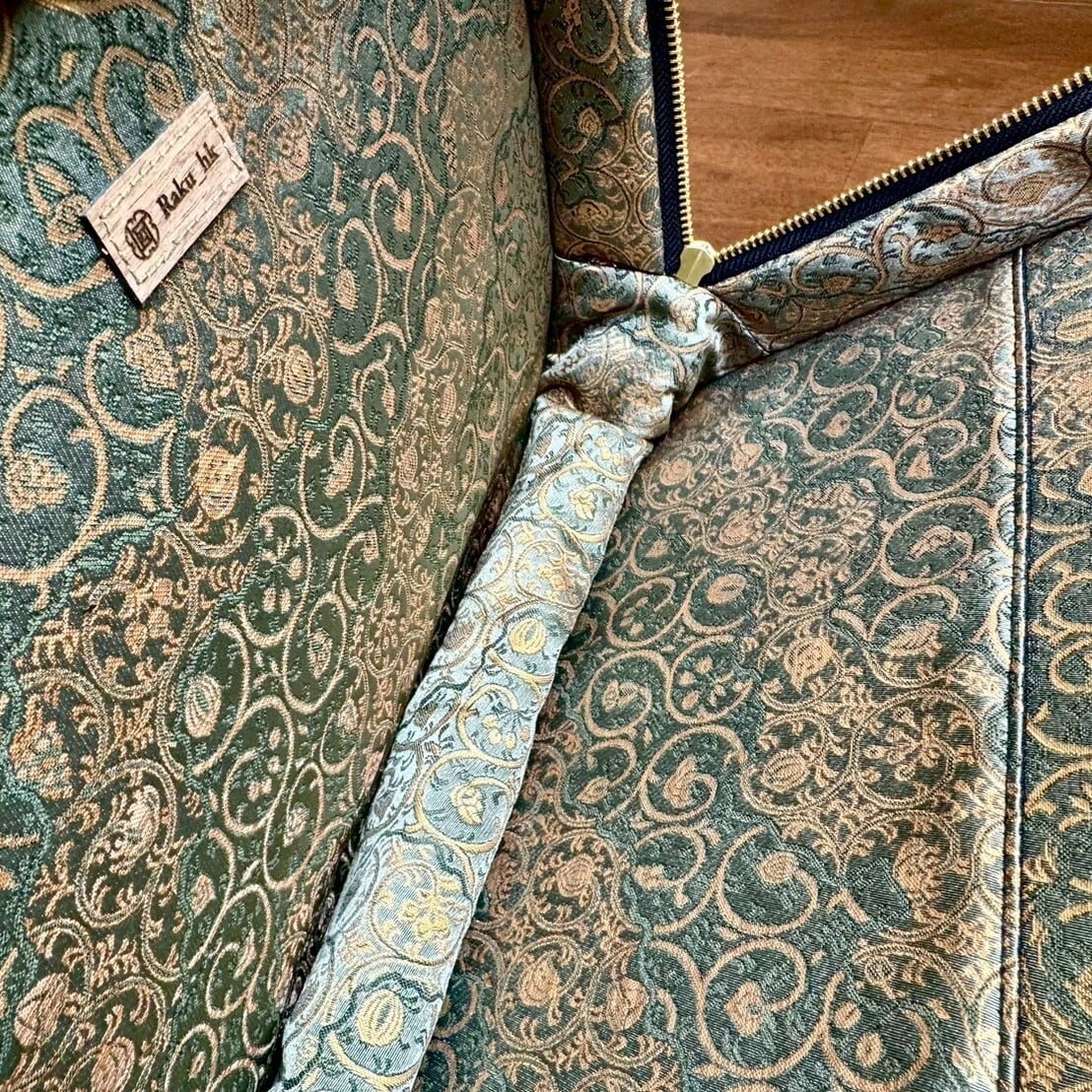
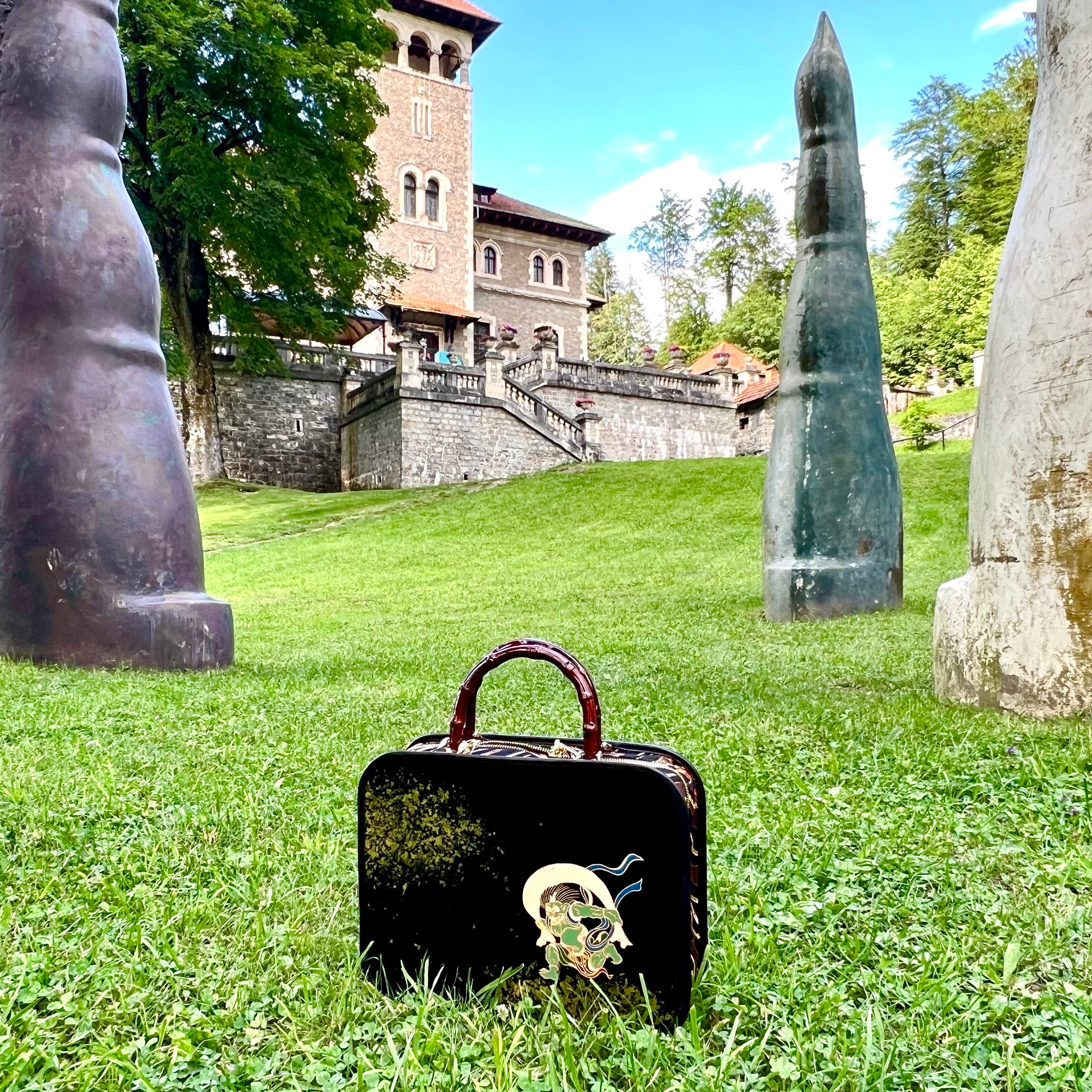
The sides and interior are finished with Nishijin-ori, Kyoto’s renowned woven textile tradition, while the handles are crafted from natural bamboo.
Aluminum, urushi lacquer, genuine gold, washi tatami, Nishijin-ori, and natural bamboo.
Different materials, textures, and traditions come together within a single bag, creating a piece in which Japanese heritage and contemporary design coexist.
⸻
Materials & Specifications
* Front: Aluminum panel / Japanese urushi lacquer finish / Fūjin & Raijin maki-e using genuine gold
* Sides: Nishijin-ori textile
* Interior: Nishijin-ori textile
* Interior pocket: 1
* Back: Black washi tatami
* Handles: Natural bamboo
* Hardware: Metal
* Made in Kyoto, Japan
⸻
Size & Weight
* Width: Approx. 34 cm (13.4 in)
* Height: Approx. 26.5 cm (10.4 in)
* Depth: Approx. 10 cm (3.9 in)
* Weight: Approx. 800 g (1.76 lb)
With an approximately 10 cm (3.9 in) gusset, the bag combines a refined, streamlined silhouette with practical carrying capacity.
Different materials are used across the front, sides, and back, giving the bag a distinctly different expression depending on the viewing angle.
⸻
Individually Crafted in Kyoto
This is not a mass-produced product.
From the lacquer and maki-e work to the final construction of the bag, skilled hands are involved throughout every stage of production.
Because the lacquer and maki-e are applied by hand, subtle variations naturally occur from one piece to another.
Rather than eliminating these differences, we value them as part of the individuality and character of each work.
Our aim is to take traditional Japanese craftsmanship beyond something that is simply displayed and admired.
To make it something that can be held, worn, experienced in everyday life, and carried into the world.
Japanese craftsmanship, carried with you.
A contemporary art bag by RAKUHOKU JAPAN.
⸻
Made to Order & Custom Orders
This piece is primarily produced to order, with each stage carefully completed by skilled artisans.
Following your order, the lacquer and maki-e artwork is created, the individual materials are prepared, and the bag is then sewn and assembled one piece at a time.
Estimated production time: approximately 3 months
Production time may vary depending on the artisans’ schedules, the design, and the materials used.
In addition to the Fūjin and Raijin design shown here, we also welcome inquiries for fully customized pieces.
From the lacquer and maki-e artwork to the materials and combinations used for the bag itself, we can discuss your preferences and explore the creation of a truly one-of-a-kind piece.
A custom piece may be created for yourself, as a meaningful gift for someone special, or as a commemorative work intended to mark an important occasion.
For fully customized orders, we will review your request before confirming production availability, price, and estimated delivery time.
Prices vary depending on the design, materials, and techniques requested.
Once production has begun, changes or cancellations may not be possible for made-to-order and custom-made items.
⸻
Care Instructions
This piece combines a variety of materials with different characteristics, including artisan-applied urushi lacquer and maki-e, genuine gold, aluminum, washi tatami, Nishijin-ori textile, and natural bamboo.
To preserve its beauty for years to come, please observe the following care instructions.
* Avoid strong friction, impact, scratching, or contact with sharp objects. Rubbing the lacquer or maki-e surface against hard or sharp objects may cause scratches or damage.
* Avoid prolonged exposure to